VFD Frequency vs Motor Speed: What to Check First
- 2026 Nov 05
Check VFD frequency vs motor speed without assuming a fixed rpm. Review the motor nameplate, display source, load and transmission before adjusting.
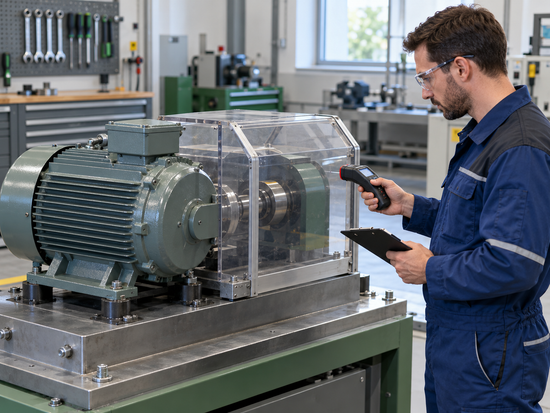
Two machines can show the same drive frequency and still run at different mechanical speeds. Before changing a setting, check the motor identity, the meaning of the displayed value, the load condition and the transmission between the motor and the machine. A frequency reading alone does not establish the speed of every shaft in the system.
This VFD frequency vs motor speed guide is a practical check sequence for induction-motor applications. It explains what to record and how to separate different kinds of speed mismatch. The aim is not to predict an exact shaft speed from a screen reading, but to give maintenance teams and application engineers a clear, comparable record.
1. Identify the motor before comparing speeds
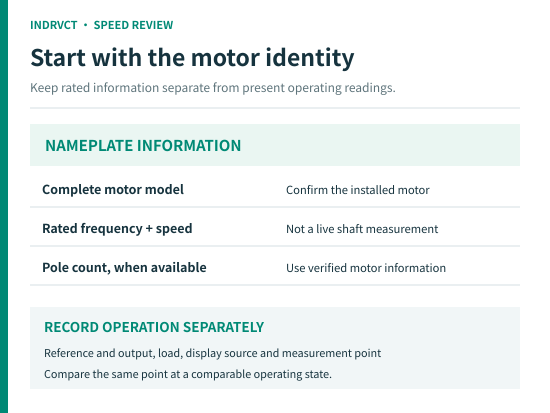
Start with a clear photograph of the motor nameplate. Record the complete motor model, rated frequency and rated speed, and the pole count when available. Keep these details together rather than sending only the power rating. Similar-looking motors do not necessarily have the same construction or rated speed.
Pole count influences the relationship between electrical frequency and the rotating magnetic field inside an induction motor. That field speed is called synchronous speed; it is not an independent measurement of the motor shaft. The distinction matters when interpreting a frequency display, because that display does not establish every motor's mechanical operating point.
Also distinguish rated speed from current operating speed. A nameplate describes rated conditions, while the machine may be running at a different load or operating point. If the motor was replaced during earlier maintenance, confirm that the installed nameplate matches the records. An old commissioning sheet may describe a motor that is no longer fitted.
2. Check whether the display shows a request or an output
A frequency reference is the operating request. Actual output frequency describes what the drive is supplying at that moment. During acceleration, deceleration or another active operating constraint, the two values may differ. Comparing a requested value with a current mechanical measurement can therefore create a misleading complaint.
Record the reference and actual output frequency together, using clearly identified display items. Note whether the machine is starting, running steadily or stopping. Avoid assembling a diagnosis from photographs taken at different stages of the cycle, because the readings may never have existed at the same time.
If output frequency has not reached the request, first identify the active operating state. Do not assume that the motor needs a higher frequency setting. The command path, effective limits and machine sequence need review before any adjustment. Capture existing settings and observations so an authorized engineer can assess them without losing the original condition.
3. Find out what the rpm display represents
A value labeled rpm may be calculated, estimated or provided by a feedback device, depending on the equipment and configuration. It is not automatically a separate shaft measurement. Confirm the displayed item's definition before treating disagreement with a tachometer as proof of a fault.
For an induction motor delivering torque, actual rotor speed differs from the rotating magnetic-field speed. This difference is associated with slip. Load and control conditions affect the operating result, so a rated nameplate value should not be treated as a fixed promise for every condition. No particular slip percentage should be assumed from an unrelated example.
Where speed accuracy matters, obtain an appropriate independent measurement under an approved procedure. Record the instrument, the shaft or measurement point, the operating state and the load. A value without this context cannot reliably distinguish a display configuration issue from a genuine mechanical-speed problem.
Control strategy is a related but separate question. INDRVCT's V/F and sensorless vector control comparison can help frame that discussion. A control-mode label alone does not establish measured-speed accuracy. Confirm the measurement or feedback arrangement required by the actual application, rather than inferring a particular interface or accuracy from a mode name.
4. Follow the transmission to the machine output
Identify the point that matters to the process. It may be the motor shaft, a gearbox output, a spindle or a conveyor belt. These are different locations and may use different units. A motor-speed record cannot be compared directly with a belt-speed target without understanding the complete transmission.
Collect the gearbox identification, the applicable transmission information and the pulley or roller details where relevant. If a belt or coupling condition is in question, arrange inspection through qualified personnel. Do not compensate for a suspected mechanical issue by increasing drive frequency until production appears satisfactory.
Use explicit labels in the service record: motor shaft speed, gearbox output speed or belt speed. State the units and where each value came from. This makes VFD frequency vs motor speed discussions more useful, particularly when a buyer, operator and technician are describing different parts of the same machine.
5. Compare like-for-like operating conditions
Compare observations at the same point in the machine cycle and under comparable load. An empty-machine observation is not a substitute for a loaded-process observation. Changes in material, mechanical resistance or production state can make two sets of readings unsuitable for direct comparison.
Keep the baseline intact. Record the existing control mode, relevant speed limits and command source without repeatedly changing settings. If an approved adjustment is later made, note what changed and repeat the agreed observation. Changing several items at once makes it harder to identify the reason for any improvement or deterioration.
Unexpected speed changes accompanied by unusual noise, heating, current behavior or unstable motion should be treated as an application or maintenance concern. Stop the investigation when the approved test boundary is reached. Do not bypass interlocks, defeat guards or continue running simply to collect more readings.
6. Send a record that separates the possible causes
Prepare a short evidence pack rather than reporting only that the frequency looks correct. Include the motor nameplate, the drive reference and output readings, any displayed rpm definition, an appropriately measured speed, the load condition and the transmission details.
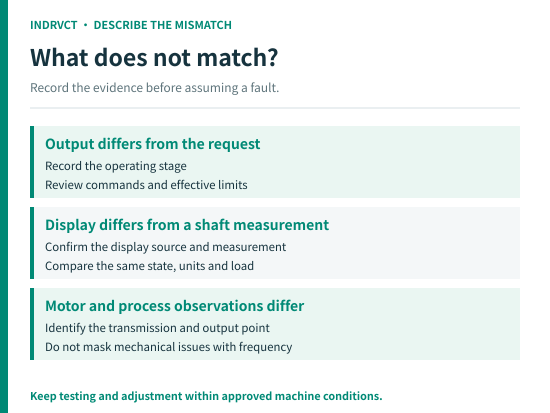
Then describe the mismatch precisely. Does actual output differ from the request? Does a displayed rpm value differ from a measurement at the same shaft? Or does motor speed appear reasonable while the driven process is slow? These questions direct the next review without guessing a replacement parameter or assuming the drive is defective.
All testing must remain within the motor's and machine's permitted operating conditions. A drive's adjustable frequency range does not authorize unrestricted machine speed. Applications needing tightly controlled speed or repeatable position should have their accuracy, feedback and safety requirements assessed separately.
FAQ
Does the same VFD frequency guarantee the same motor speed?
No. The motor construction, load and operating conditions matter, and the machine transmission can change the final output speed. Identify the motor and measurement location before comparing results.
Can the motor nameplate replace an actual speed measurement?
No. Rated speed describes a rated operating point. It helps identify the motor, but it does not establish the current shaft speed under every load and command condition.
Why can the drive display and tachometer disagree?
Check whether the display is calculated, estimated or based on feedback. Then confirm that both readings refer to the same shaft, units, operating state and measurement period.
Should I increase frequency when the machine runs slowly?
Not before identifying the cause and confirming the permitted operating limits. Record the reference, actual output, motor condition and transmission first, then obtain an appropriate application review.
Make the speed question easier to resolve
For a VFD frequency vs motor speed review, send the evidence pack and the required process result. Contact INDRVCT with clear motor identification, comparable readings and the transmission details, so the next discussion focuses on the actual mismatch rather than an assumed conversion result.